Industry Legend
Peter Bird
From Apprenticeship to Ambassador: A Lifetime in KBB with Peter Bird
Welcome back to the Simon Acres Group sofa.
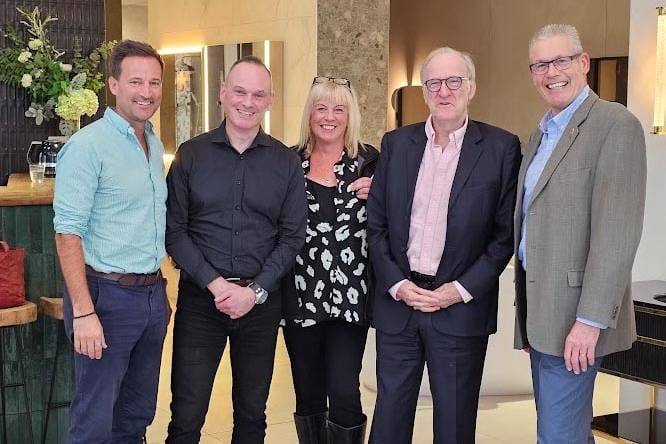
Today, I am joined by a true icon of the KBB world and a dear friend I’ve had the pleasure of supporting for many years. You might recognize him as a standout feature from the first season of our Industry Legend series. At 84 years of age, he is still actively attending the showroom and engaging with customers, bringing over six decades of expertise to the table. Please welcome the founder of Angular Interiors and a well-known KBSA advocate, the legendary Mr. Peter Bird.
What does it take to sustain a career in the kitchen and bathroom industry for over 60 years? In our latest conversation on the Simon Acres Group sofa, I sat down with Peter Bird to discuss the evolution of the trade, the “lost art” of the apprenticeship, and the secret to finding and keeping top-tier installers.
The 65-Year Journey: When Learning Trumped Earning
Peter reflects on his start in the industry nearly 65 years ago, beginning a four-year apprenticeship in the late 1950s. Back then, the starting salary was a humble £3 a week. However, Peter emphasises that the mentality of a trainee was vastly different then.
“It wasn’t all about how much I earn… how much I can learn? … You were grateful for the opportunity to learn.”
He notes that these apprenticeships were highly sought after and provided a “very good grounding” that led many of his peers to eventually run their own successful businesses
Addressing the Modern Skills Gap
When asked about the current lack of tradespeople, Peter is firm that apprenticeships are not “downmarket” and are essential for the future. He suggests that a four-year commitment is a small price to pay for a skill that moulds your entire future. He also questions the modern push toward degrees that may not lead to tangible careers:
“Do we need as many media graduates as we get… where at the end of it, you can have a nice degree, but there are no jobs?”
The Secret to Retaining Installers
A major challenge for KBB businesses today is keeping installers from being “poached” for slightly higher daily rates. Peter explains that his business, now run by his son, prioritises consistent work over “top wages”
“We never paid the top wages. We just paid consistently. And nobody ever got robbed.”
He shares the story of an installer named Andy who has been with them since age 18—for over 40 years—because the company provided steady employment and the initial opportunity to learn on the job.
Specialist vs. Generalist: The Fitter’s Mindset
One of the most insightful parts of our talk was Peter’s distinction between a general carpenter and a true kitchen specialist. He argues that a kitchen fitter is unique because they require a different toolkit and, more importantly, a different mental approach
“A man who’s a kitchen fitter has to be able to work in people’s houses… You have to be an ambassador.”
Peter concludes that while there is no easy answer to the labor shortage, the key lies in finding individuals who have a “kinship with the kitchen industry” and who are willing to invest in themselves to become more than just a builder, but a representative of the brand inside a customer’s home.
The difference between a general carpenter and a kitchen specialist lies in their tools, materials, mindset, and the environment in which they operate. While many carpenters may claim to be kitchen fitters when given the opportunity, Peter Bird explains that a true specialist is “unique”,.
Key distinctions include:
- Specialised Equipment and Materials: Even if a carpenter and a kitchen specialist possess equal woodworking skills, the specialist utilises a different toolkit specifically designed for the nuances of kitchen installation. They also work with a different range of materials specific to the KBB (Kitchen, Bedroom, Bathroom) industry.
- Personal Investment: A kitchen specialist is someone who has chosen to invest in themselves specifically to master the trade, moving beyond general construction to develop a “kinship with the kitchen industry”,.
- The “Ambassador” Mental Approach: One of the most critical differences is the mental approach required for the job. Unlike a general carpenter who may work on a traditional building site, a kitchen specialist works inside people’s homes. This requires them to act as an “ambassador” for the company, necessitating a level of professionalism and care suited for a residential setting rather than a construction site.
Ultimately, while a kitchen specialist is often a “good carpenter” at their core, they are distinguished by their decision to specialise and the specific professional standards required to work in a customer’s private living space.
Key Questions & Answers
Q: How can a trade association help with economic and regulatory pressures? Daphne emphasizes that unity is strength when dealing with the government. For example, on the topic of packaging costs, she notes: “our role as the association is to make sure that it is fair… so that our members are being charged correctly”.
Q: What is the goal for the association in the next five years? The focus is on building an “influential community”. Daphne explains: “Success will look like when we have a much stronger voice… tackling challenges together”.
Q: How do we attract new talent to the sector? It starts with early education and advocacy. Daphne admits that even her own daughter wouldn’t immediately think of the bathroom sector for a marketing career, suggesting that as an industry, “we don’t shout about it… we have a role to play in that”.
A Lighthearted Lesson
Every leader has a learning moment, and Daphne shared a hilarious story from her early days as a new mother returning to work. After getting ready in the dark for a major board meeting, she realized mid-session that her “dress was on the inside, back to front”. Her professional advice? “Don’t get dressed in the dark”.
Don’t Miss the Annual Conference!
The association is opening its doors for a flagship one-day event on October 8th in Birmingham. It will feature provocative debates, a gala dinner, and the celebration of the “30 under 30” winners.